
July 2024
Copeland Gallery, Peckham, London
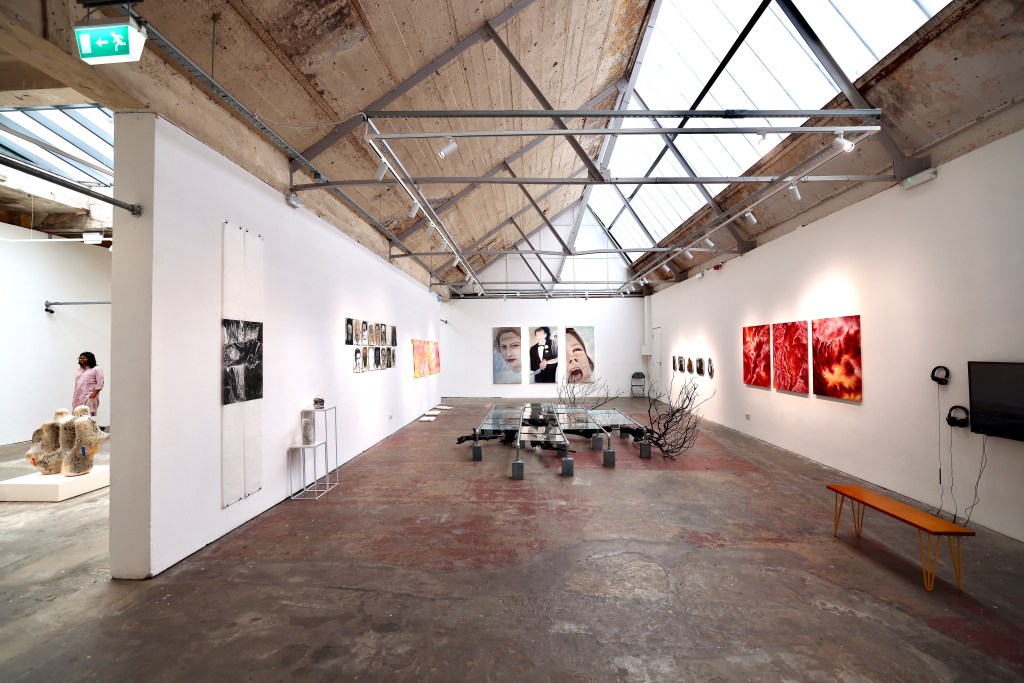
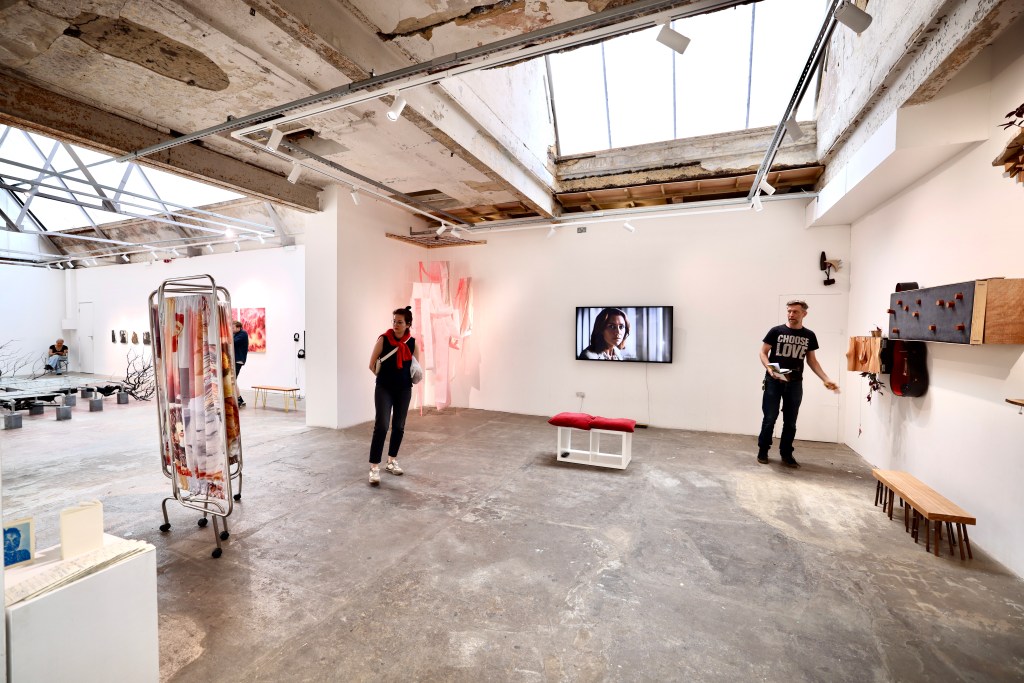
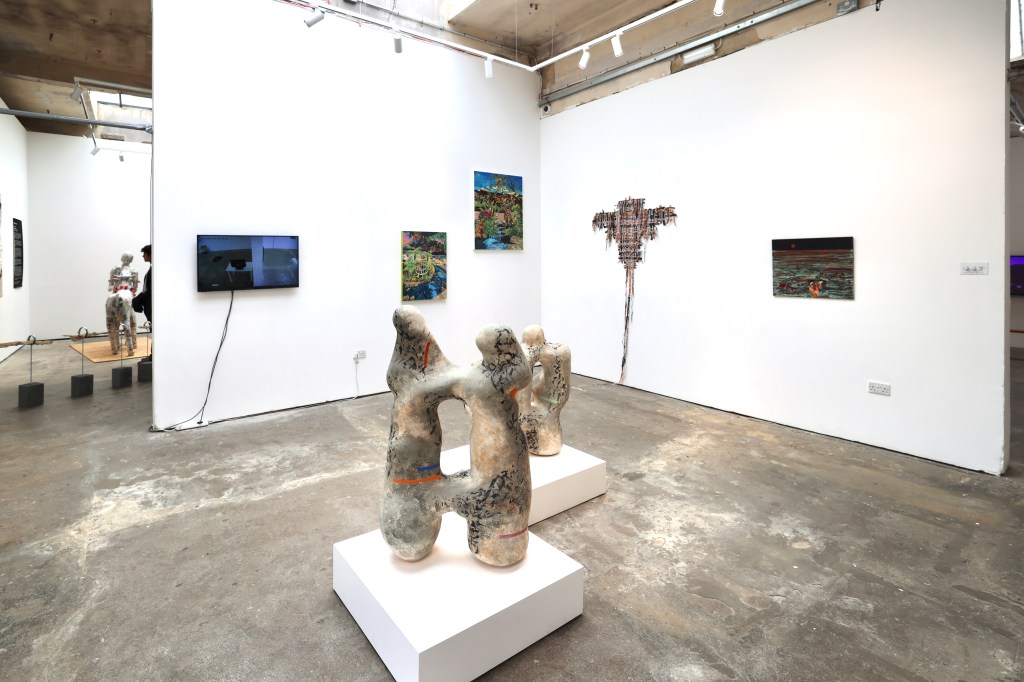
For ‘and you would have to believe it‘, Critical Edge Collective organised an open call an invited 15 other artists to participate in a group exhibition exploring themes of knowledge and power, particularly how systems of information colour our perceptions of the world around us. The exhibition questions: ‘What evidence do we use to test whether the information we receive is reliable?’, ‘What sources of knowledge do we trust?’, and ‘Whose interest do information systems serve?’.


Participating artists:
The show features 24 emerging artists exploring a wide range of media including drawing, painting, sculpture, computational arts, and printmaking: Sofia Alrich Veytia, Nele Bergmans, Jess Brauner, Matty Emery, Helen Grant, Jane Hughes, Nimmi Hutnik, Caroline Ip, Chrysa Kanari, Kate Kelly, Alexandra Kim, S. R. Latham, Belinda Moren, Georgina Odell, Iliana Ortega-Alcazar, Te Palandiian, Chanin Polpanumas, Nasus Y Ram, Rhi Stanton, Joy Stokes, Eleanor Street, Carmen Van Huisstede, Tong Wu, Jeremy Wyatt.
Sofia Alrich Veytia
Sofia’s work pushes against the narrative that our individualist and capitalist society has embedded in the psyche of individuals for far too long, the idea that humanity is at the centre of all life and only we have sentience. Sofia embraces the idea that we are interconnected with the world around us, shifting the perspective to a more holistic view of our place in the universe. In a time of rapid climate change and increasing individualism, she believe that expanding our understanding of ourselves as part of a larger whole can lead to harmony within our world and among each other. By abstracting images from the natural world Sofia seesk to create visual associations that express how our universe is connected in unexpected ways, reflecting on the Hermetic concept of -As above, so below-.
http://www.arte-alrich.format.com
@sofiaalrich
Nele Bergmans & Te Palandjian
Working in collaboration for the first time, Nele and Te bring together their research on material, recontextualization, and landscape (specifically solar farms, greenhouses, the desert, excavation sites). For each installation, the artists work using a communicative two-step method, with one responding to the sculpture that the other provides.
In Slowly, Extinction, Nele deconstructs the greenhouse into a single plane, reflecting on their history of rupture. Greenhouses manipulate heat, humidity, and airflow to sustain plants, often from other cultures. In doing so, these plants are situated as fragile beings in need of nurturing. Te responds to Nele’s greenhouse as a mechanism that can imitate a diversity of environments, and characteristically, amplifies heat. Underneath the glass, Te positions heat-treated Plane tree sections as a simulacra for the Southern Utah desert environment, its fauna in a state of slow death under a barely tolerable sun.
For Displaced Fragments, Te makes casts from marks left by her body whilst recycling British clay deposits. Nele considers how the features of stagnant objects reference the past physical and mental energy involved working with materials in a conscious way. Resituating Te’s casts in a curatorial context, Nele arranges and frames this record of sustained movement as artefacts on display.
@tepalandjianart
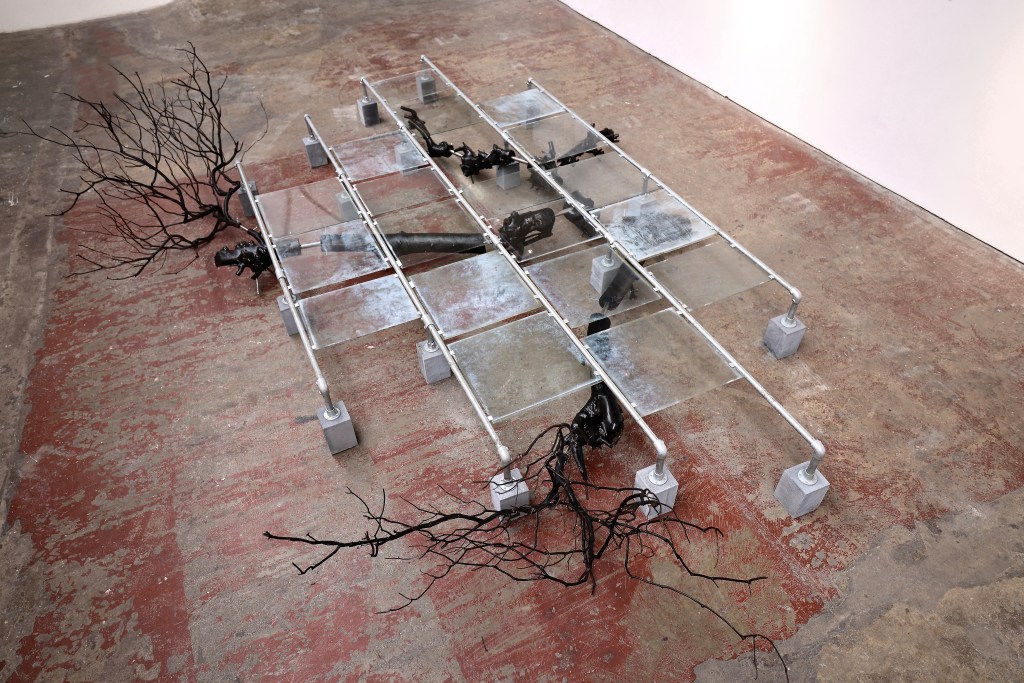

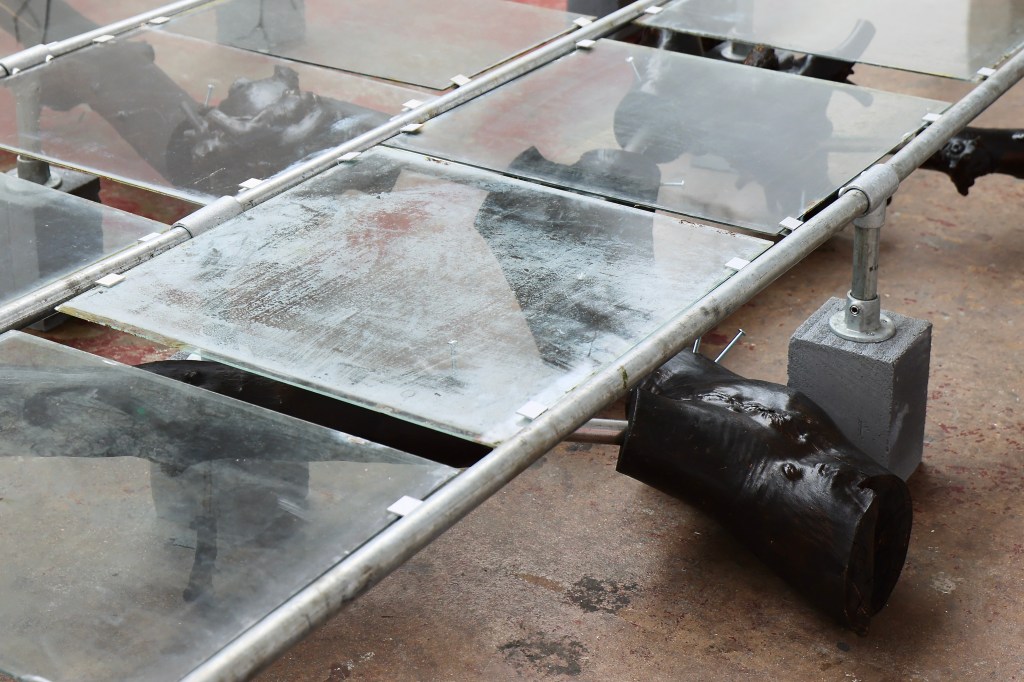 Slowly, Extinction – Photography Te Palandjian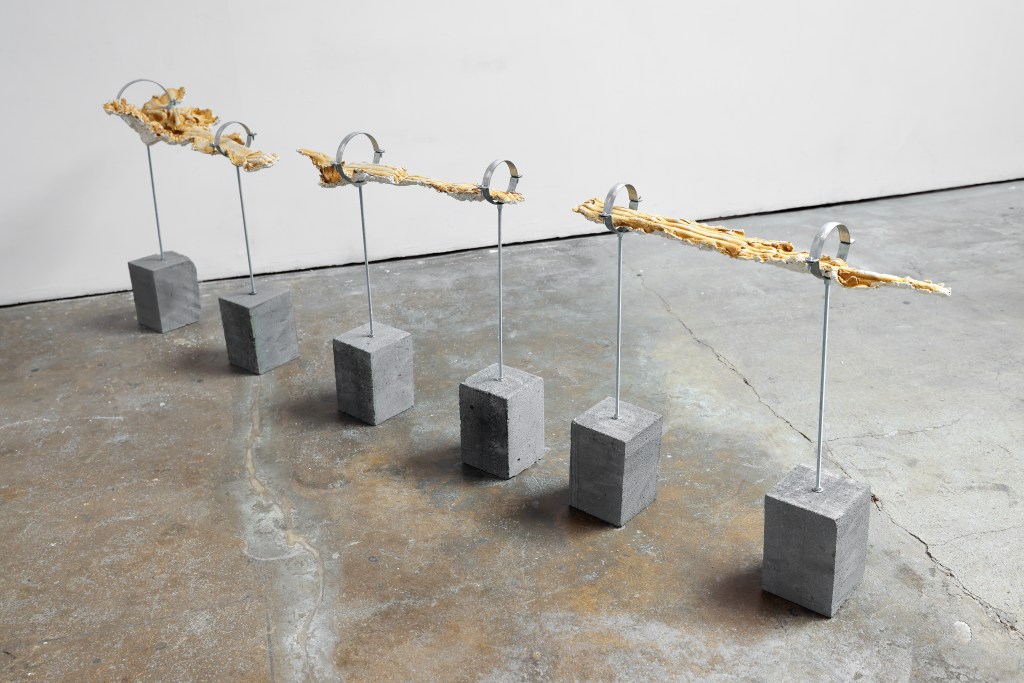
Jess Brauner
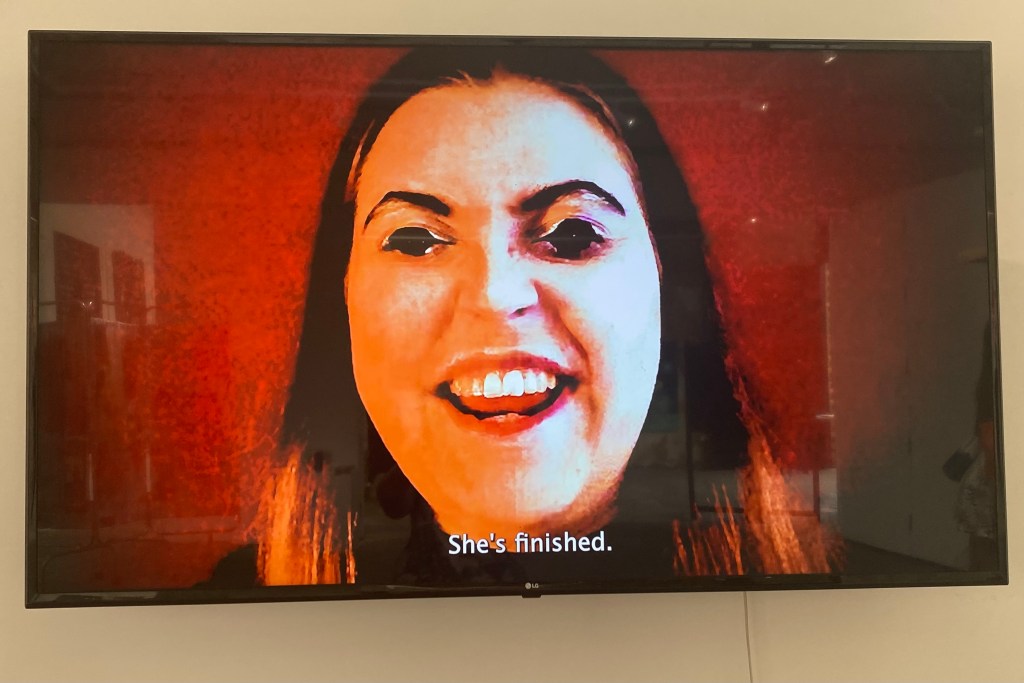
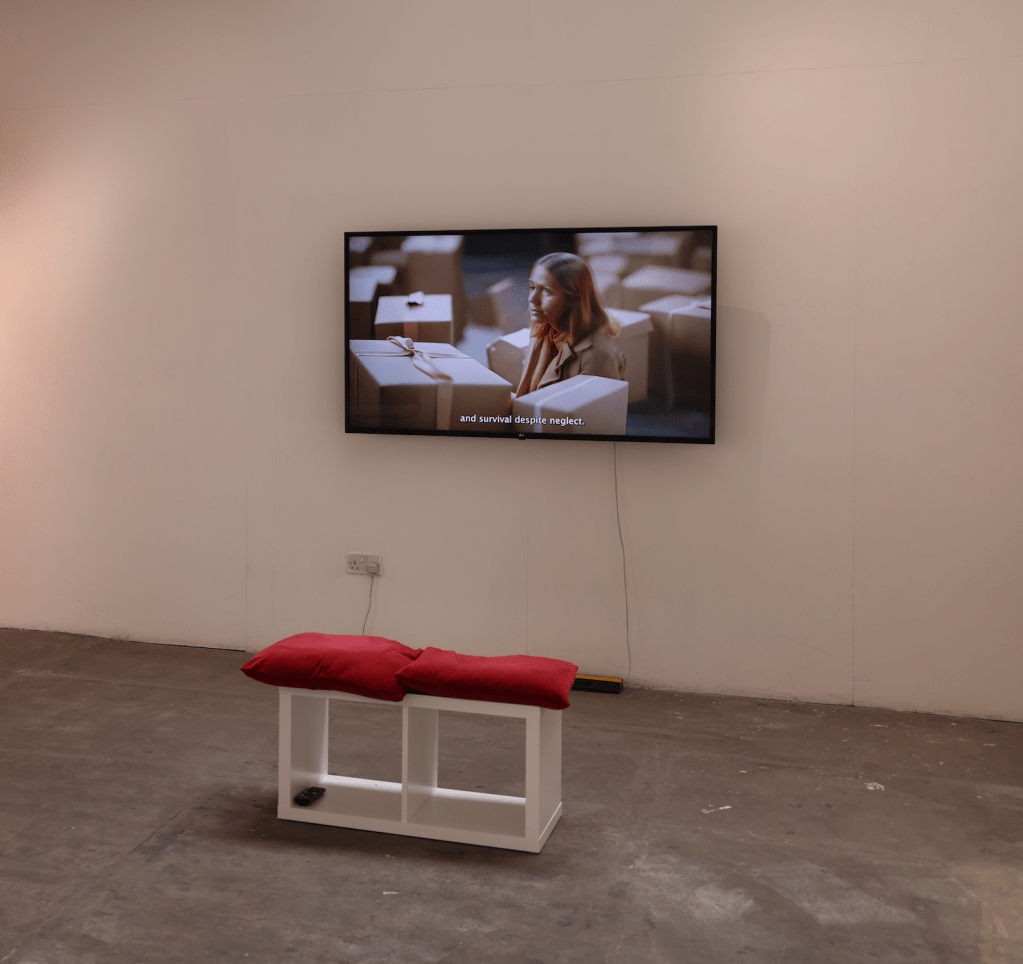
‘Sleep Fake’ is a video artwork that engages with anxieties surrounding the contexts of human and AI hallucination, AI data collection and AI security. The absurd illusions AI offers through image and language generation technology has been incorporated into the work alongside the intimacy of semi-autobiographical creative writing and filmed performance. AI generation technology requires data harvesting; a process that threatens to consume personal data and artist’s works without consent. With the development of AI deep fake technology, our perception of digital realities and knowledge surrounding ‘truth’ will continue to be thrown into question.
http://www.jessicabrauner.wordpress.com
@jessicabraunerartist
Matty Emery
Matty’s work is a critique of power structures and the methods used to maintain control, such as the media and algorithm. He explores the dominance of corporate power over democracy and foreign influence on Western politics. His work uses textures and layers as a representation of the complexity and lack of opaqueness in society and politics. He condemns elitist cronyism, lobbying, and dishonesty, asserting that we do not live in a true democracy and instead, believes that successful politicians represent the private sector and the lobbyists who fund them, rather than the people who are sold lies to create fear and division.
What the Fuck Are We Supposed to Do? depicts the complexities created by capitalist influence over media and modern technology, suggesting that it has become impossible to imagine a future where capitalism benefits everybody, instead of an elite few.
https://mjemery94.wixsite.com/mattyemery1
@mattyemeryart
Helen Grant
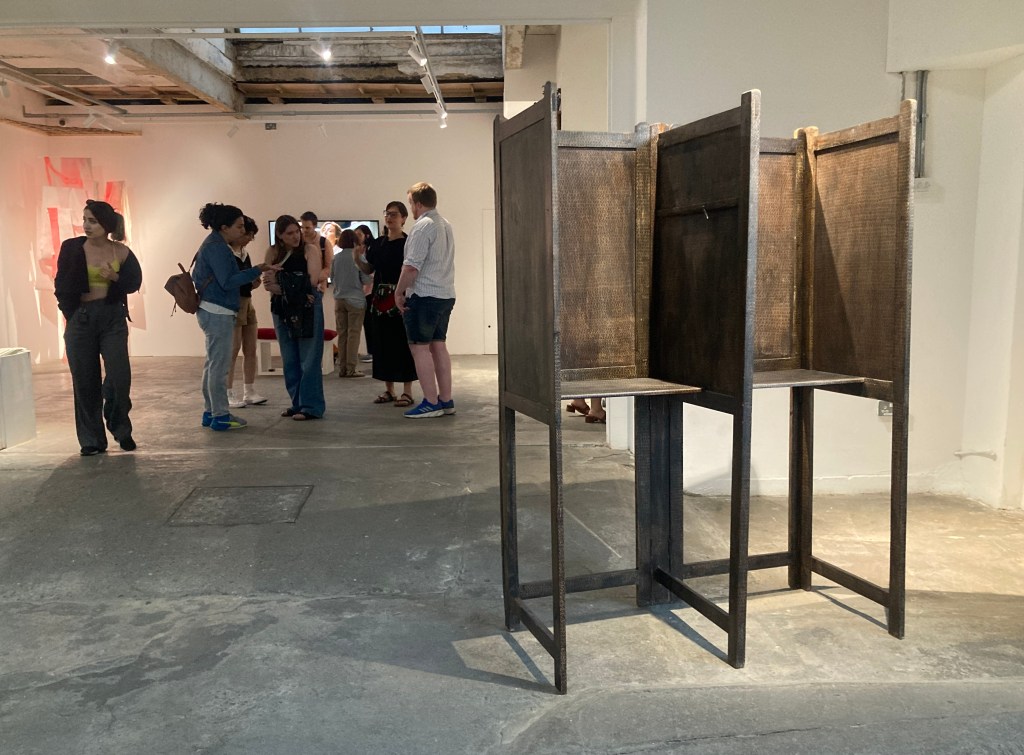
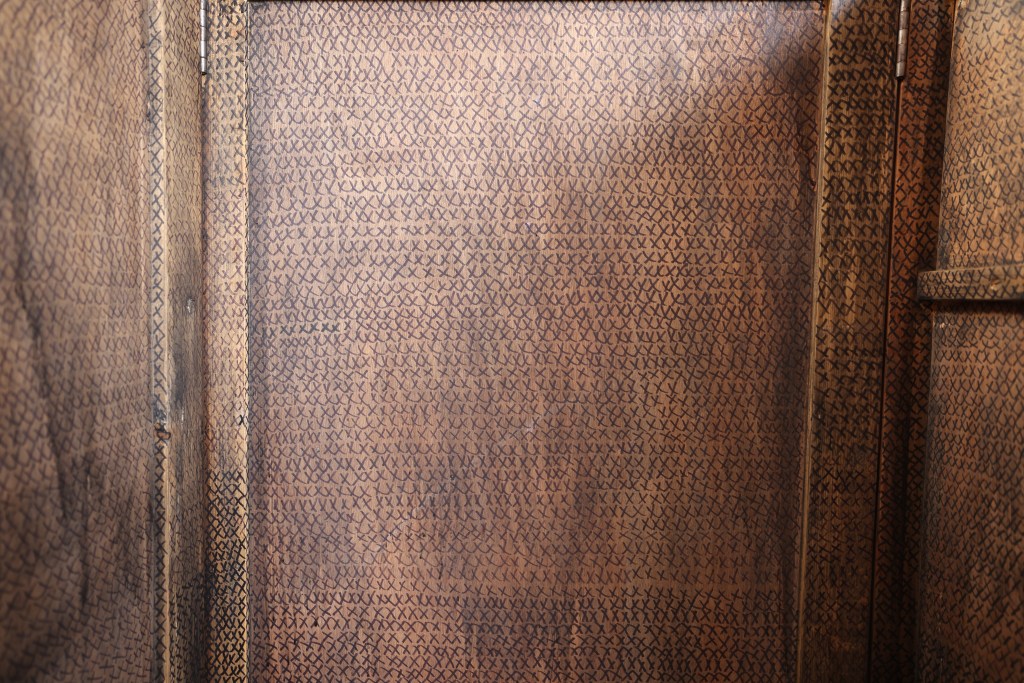
KissKiss is a pair of archaic wooden booths covered in hand-drawn crosses – the mark we still use to cast our electoral votes. Whether or not we believe this solitary act has much impact, it is our only real opportunity to choose political representation and therefore decide who governs our country. The booths afford privacy to do this within a society more used to being surveilled at every instance; our physical selves constantly filmed and photographed, our thoughts and habits recorded as digital data. Voting is now an unusual analogue experience, surviving as a deliberately reassuring ritual or simply a tiresome throw-back?What the Fuck Are We Supposed to Do? depicts the complexities created by capitalist influence over media and modern technology, suggesting that it has become impossible to imagine a future where capitalism benefits everybody, instead of an elite few.
@helenkgrant
Jane Hughes
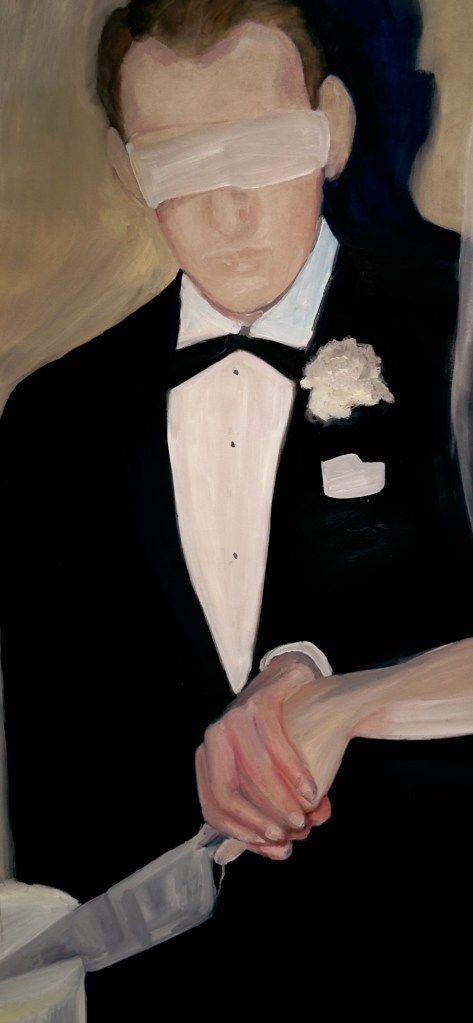
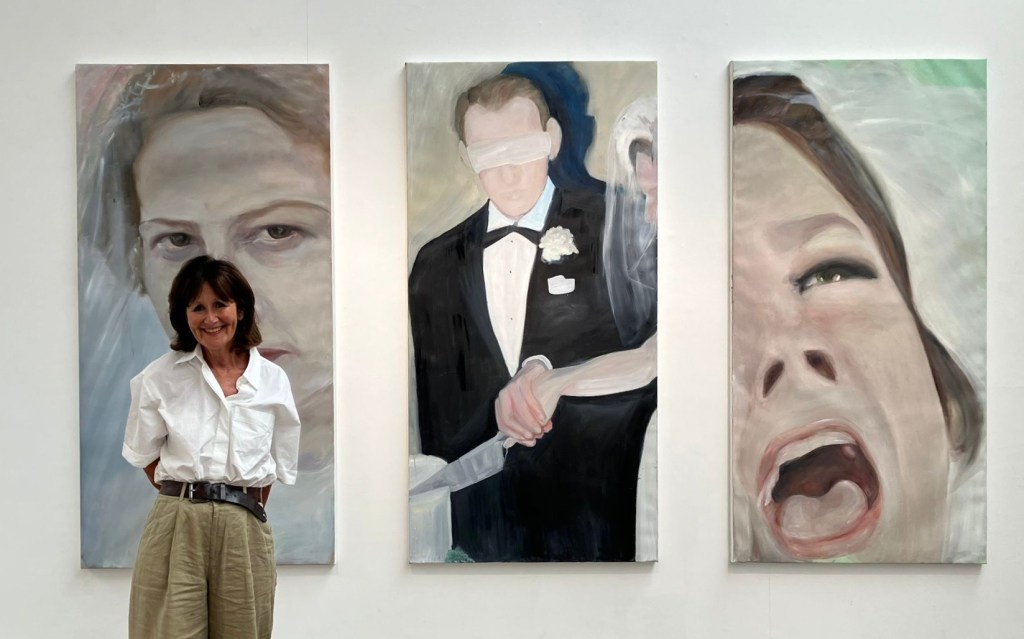
‘History’, who records it and who determines what stories are told, is the focus of Jane Hughes’ painting practice. Seen through the prism of women’s ‘political experience’ within the institution of marriage or domestic partnerships Jane reframes the stories of women, largely obscured and expunged from history, directing our attention to where power resides and who has agency. In her most recent paintings Jane explores the semiotics of the ‘veil’ worn by the bride in the wedding ceremony with its traditional associations and ideas around feminine identity namely; idealised beauty, purity, and submission. Ideas which continue to reverberate and have relevance to current debates about ongoing inequalities society refuses to see or chooses to forget.
@hughes.jane60
Nimmi Hutnik
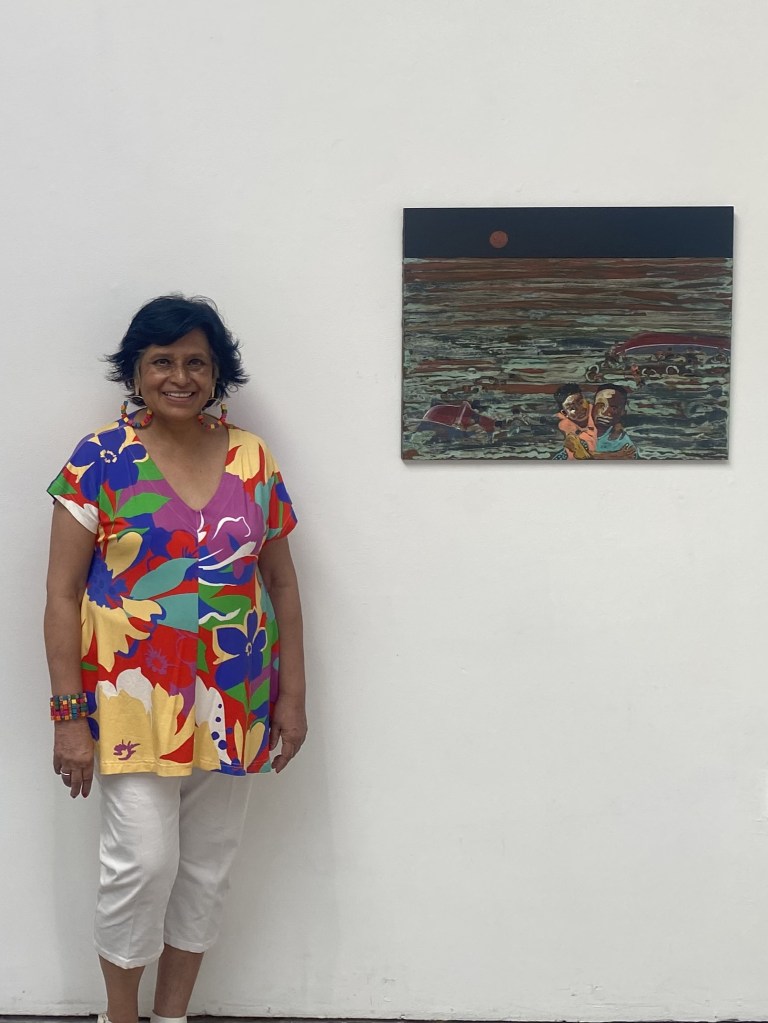
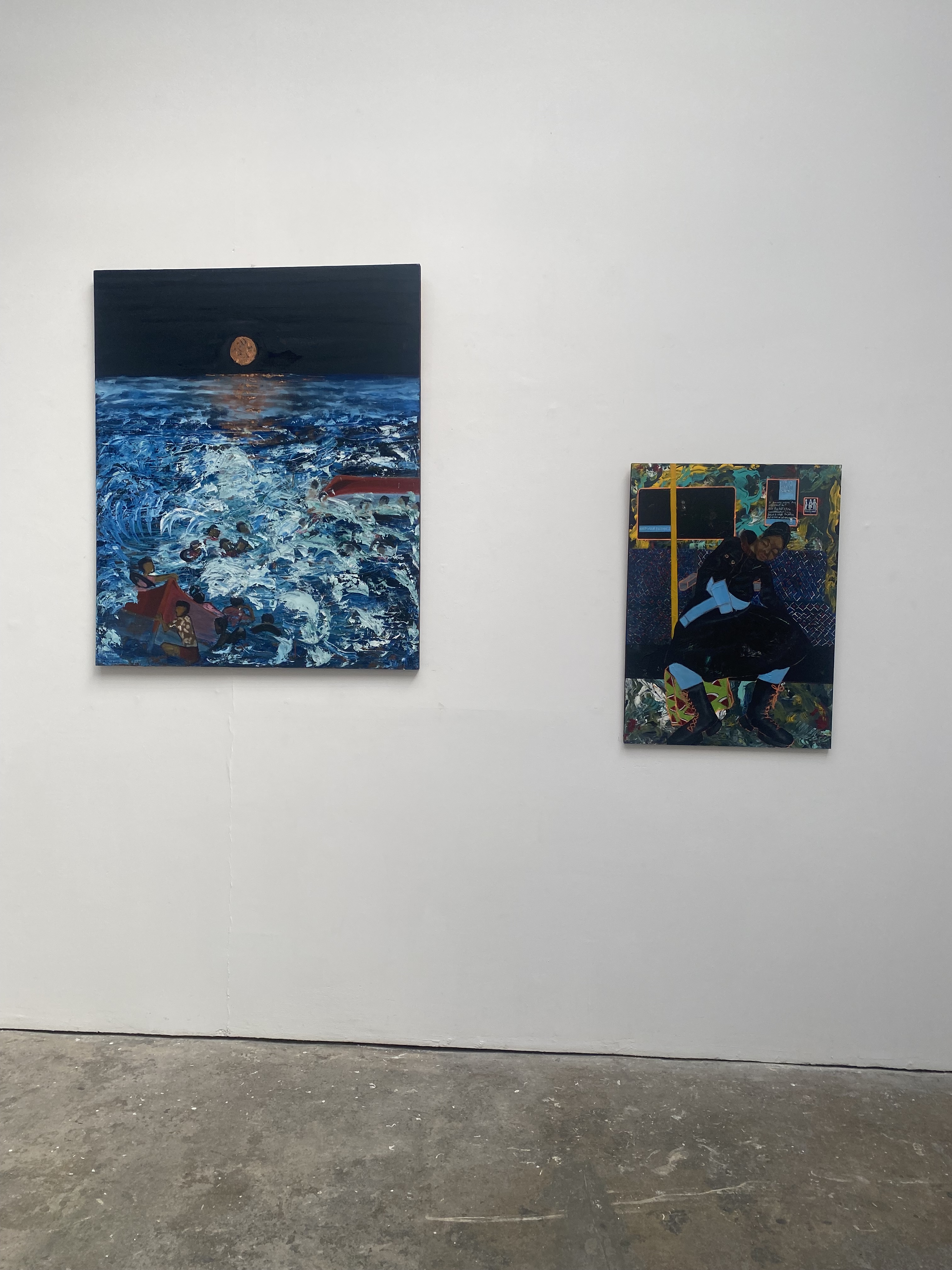
Nimmi’s work addresses both political and social issues. In ’The Big Issue’ she portrays a rough sleeper spending her night on the London underground. In ‘Stop the Boats?!’ she questions the wisdom of Rishi Sunak’s immigration policy and action. She also makes pen and ink paintings which look at the burnout created by work schedules that exist within capitalistic societal structures.
Trained originally as a psychologist, her painting practice involves the use of acrylics and oils, sometimes on canvas, at other times on board. She executes her drawings on paper with bamboo pen and inks brought from India.
@nimmihutnik
Caroline Ip
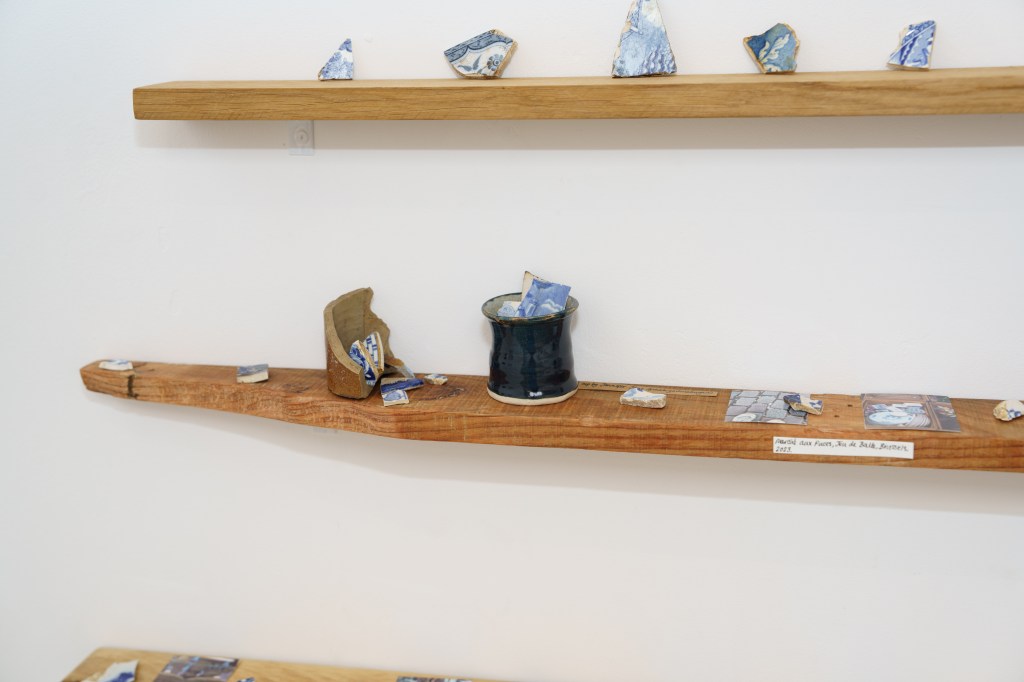
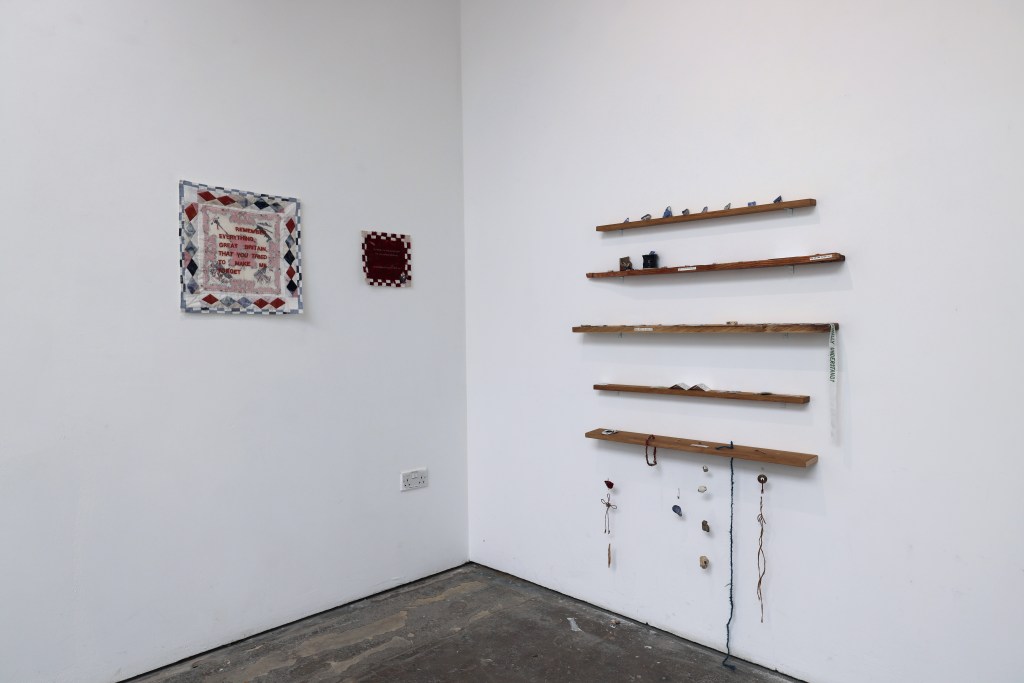
These two works – Love Letter and Affirmation – sit within my larger practice exploring diasporic identity, storytelling, and archives. Centred around the conceptions of British identity and ‘Britishness’ in the face of legacies of colonialism and the ongoing complicity and guilt in global conflict, exploitation, and violence, Love Letter uses words from Joan Hillery’s film That Great British Documentary as a reminder that knowledge is power, and that remembering history can overcome powerlessness, pain and apathy. Affirmation is a deeply personal work which reminisces on my experience of growing up, and the shame and guilt associated with my mixed identity.
@caro.line.ip
Chrysa Kanari
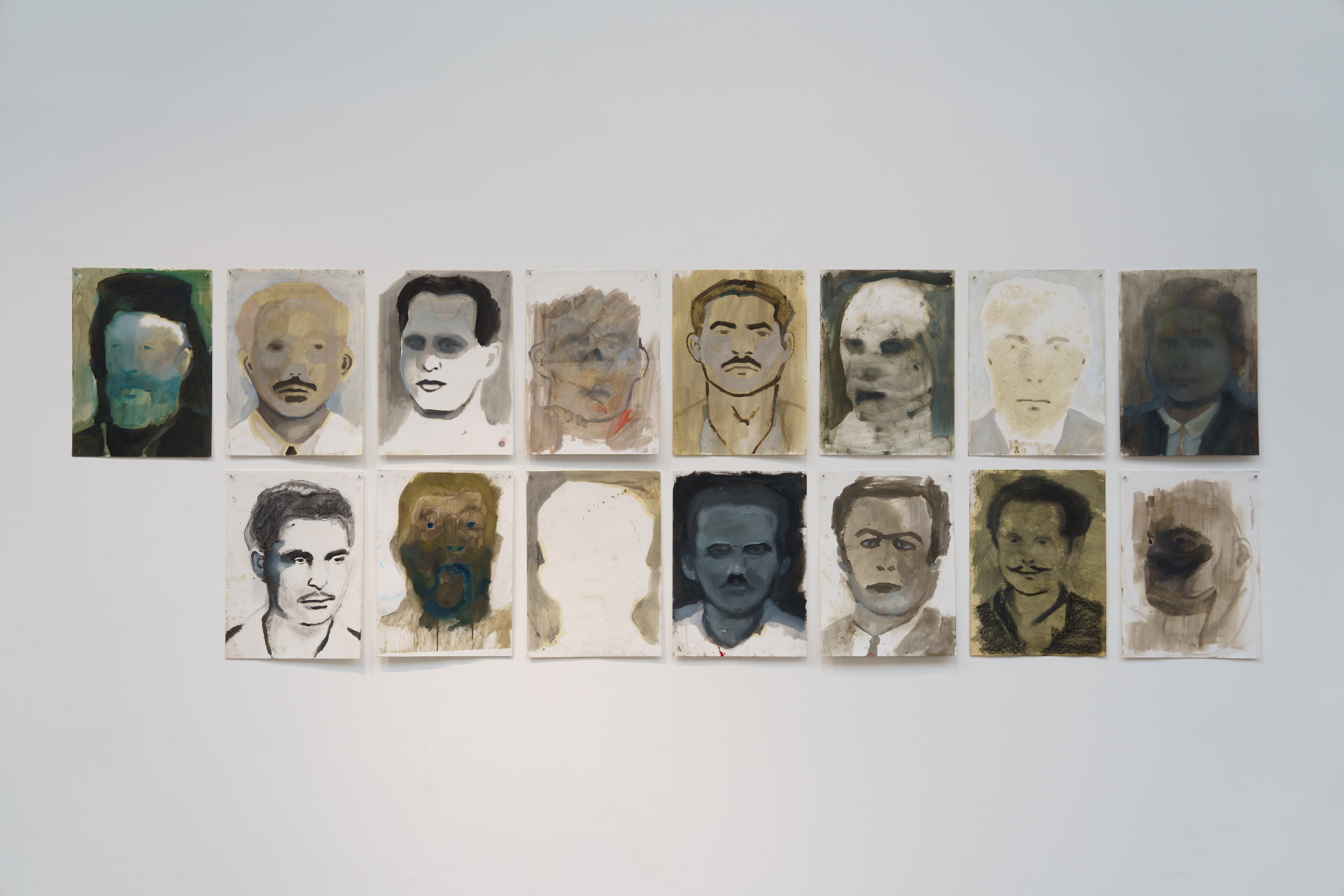
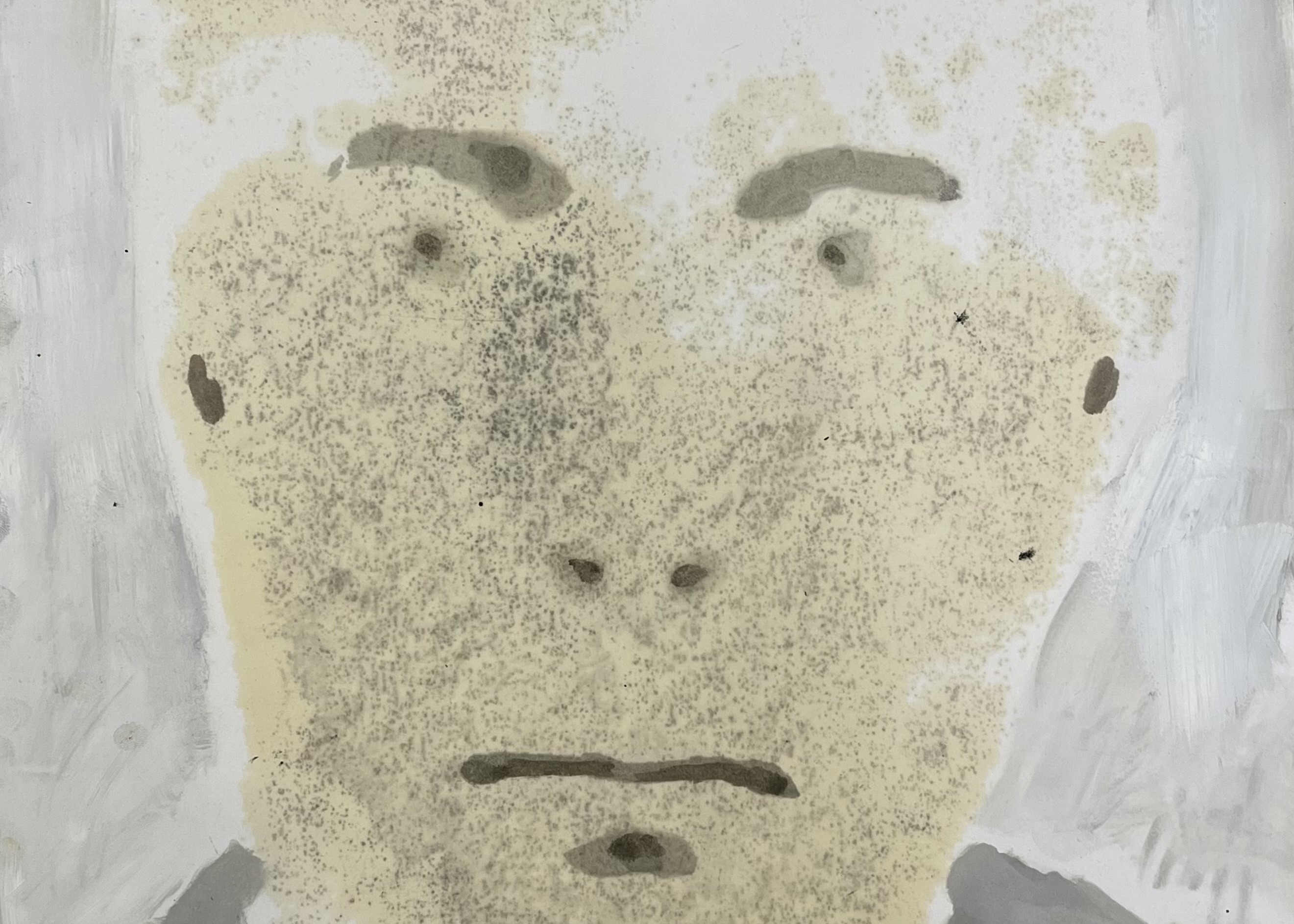
Chrysa is a Cypriot artist based in London. Her practice involves the unlearning of history, as it was taught to her through a post-colonial lens and the renegotiation of perpetuated and parroted narratives that conceal and form selective memory. Her series Blame the Hero(2023) urges the viewer to challenge the idea of the Hero/Anti-hero and question long-established national values deemed as indisputable. This ambivalence of the hero is expressed in the title Blame the hero, which can be interpreted in two ways; who you blame in your books, is actually a hero or who you claim to be a hero, actually deserves blame.
@chrysa_art
Kate Kelly
Kate explores and creates a platform for voices and narratives through visual and audio representation. Kate’s practice engages and amplifies issues of representation, collaboration.
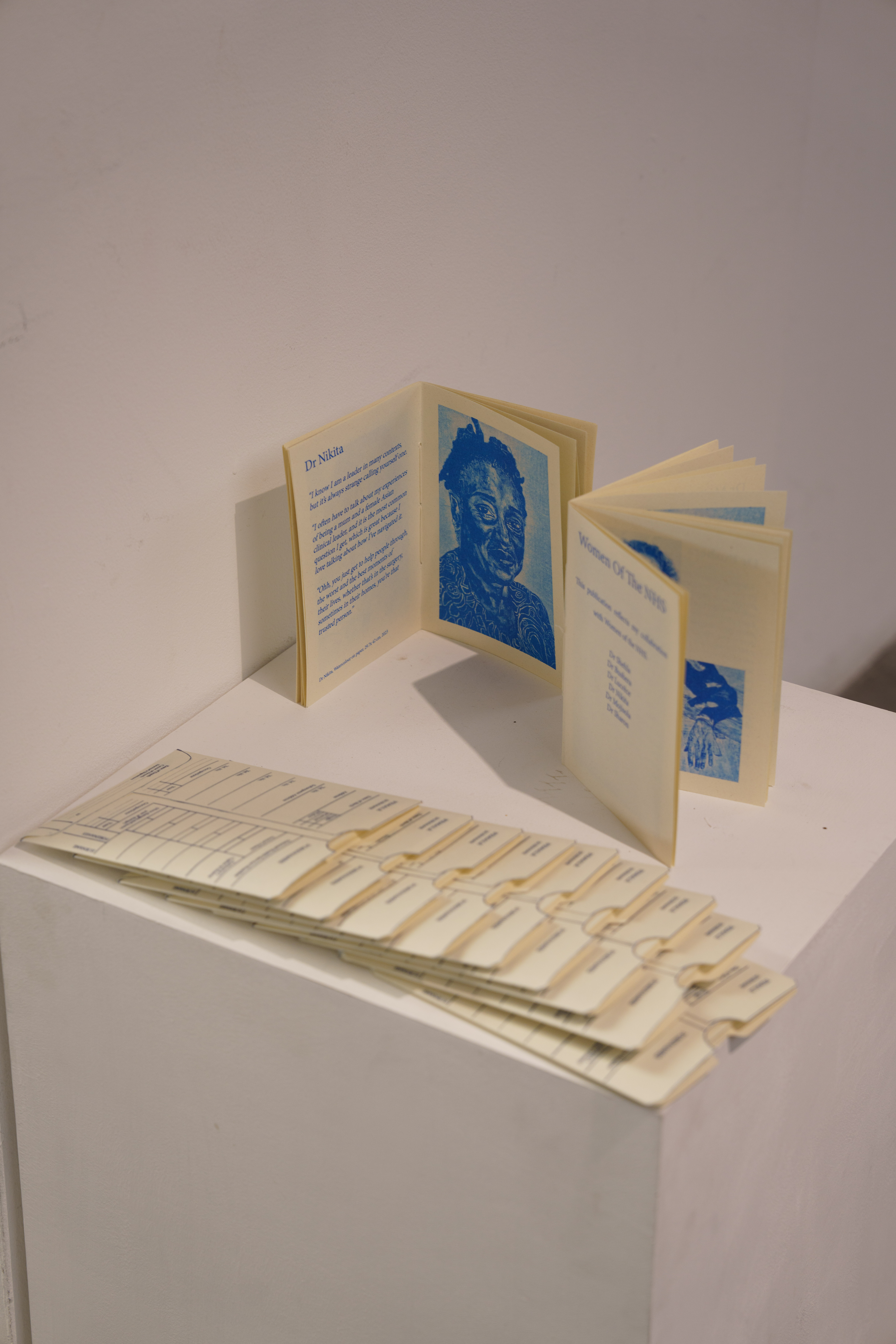
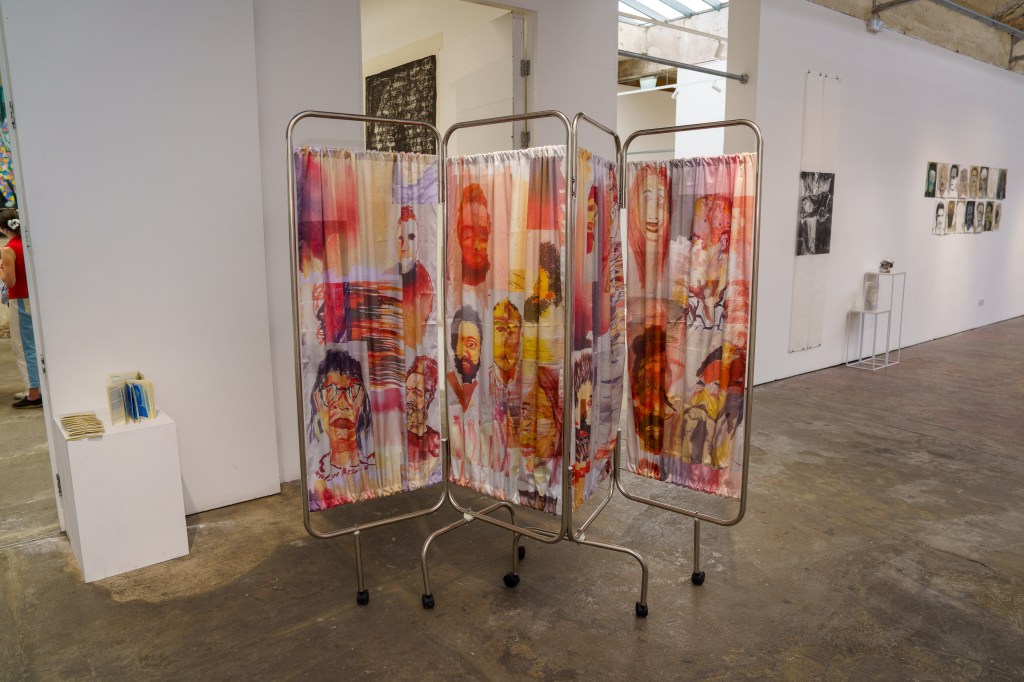
Her practice explores the complex interplay between gender, knowledge, experience, and power in contemporary society, contributing to the the ongoing dialogue surrounding knowledge, power, alongside collaborative projects such as SURGE III and Women of the NHS.
‘Waves of Experience’ has been created by artist Kate Kelly in collaboration with Robert Stafford-Williams the Wellcome/EPSRC Centre for Surgical and Interventional Science (WEISS) at University College London (UCL), The University of the Arts London Post Graduate Community, The British Heart Foundation, ALK Positive and a group of people affected by Condition. CC BY-SA 4.0 .
@katekelly5015
Alex Kim
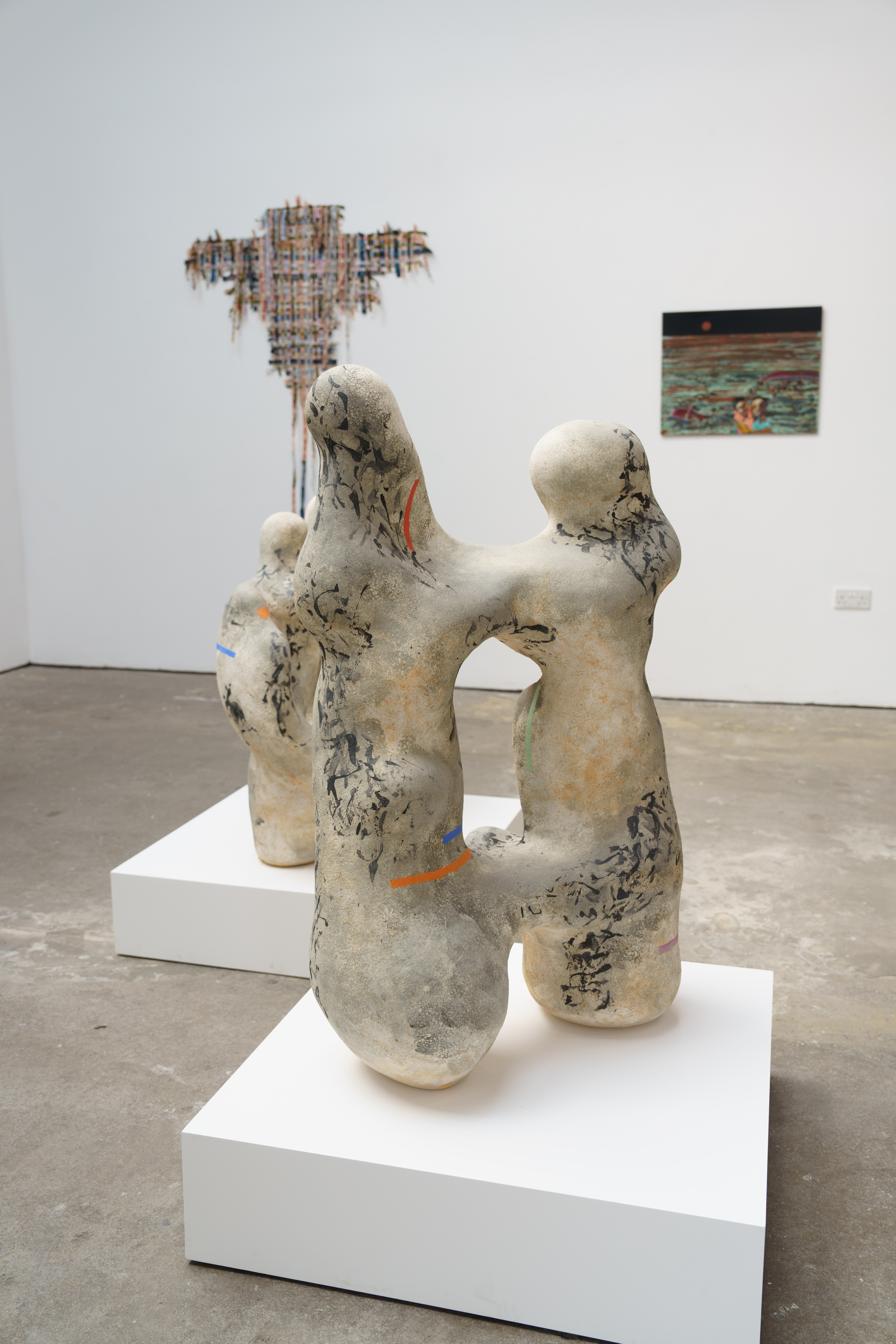
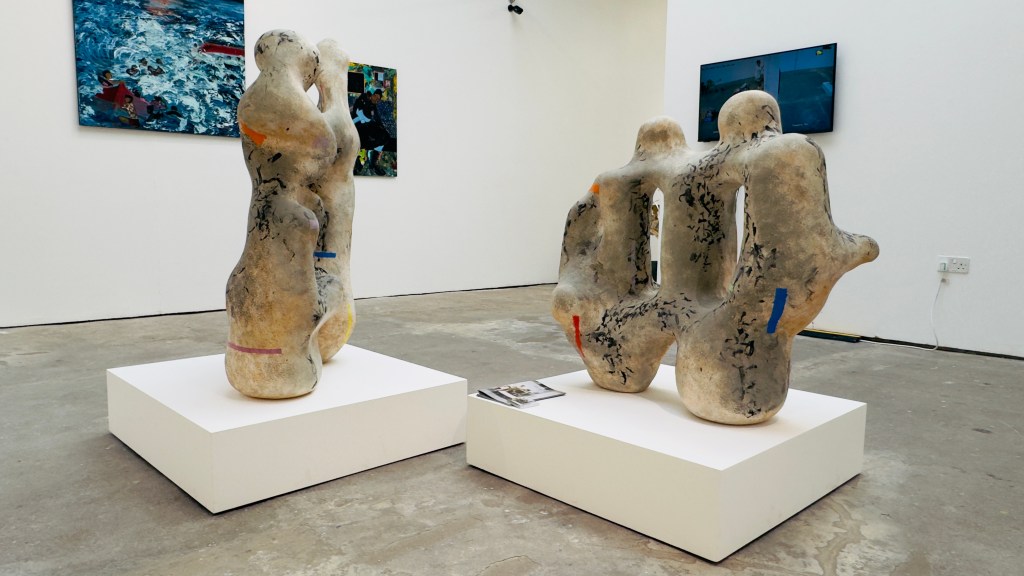
These pieces are an anthropomorphic expression of the push and pull Alex Kim feels between two different ideals of womanhood: the ideal from her Korean heritage and her American upbringing. They are simultaneously an homage and a subversion of the famous Korean stone fertility statues “dol hareubang” (stone grandfather). Kim re-imagines these as “dol harmang” (stone grandmother) in an exploration of femininity, womanhood, and expectation. They are an assertion of ideals (of womanhood/femininity/motherhood) as constructs. We learn these expectations and unknowingly accept them as static truths. This piece is a self-portrait situating Kim in the unique way she hasI been taught to think about her own womanhood.
@alexandrakimceramics
S. R. Latham
Combining working class archives with sci-fi city-scapes, Stevieray Latham’’s work asks questions about the way that we think about class histories and futures. Patterns and costumes inspired by British folk traditions provide an additional layer of atemporal ambiguity, a trace of cultural memory that runs through past, present and future.
http://www.stevieraylatham.com/art
@stevieraylatham
Belinda Moren
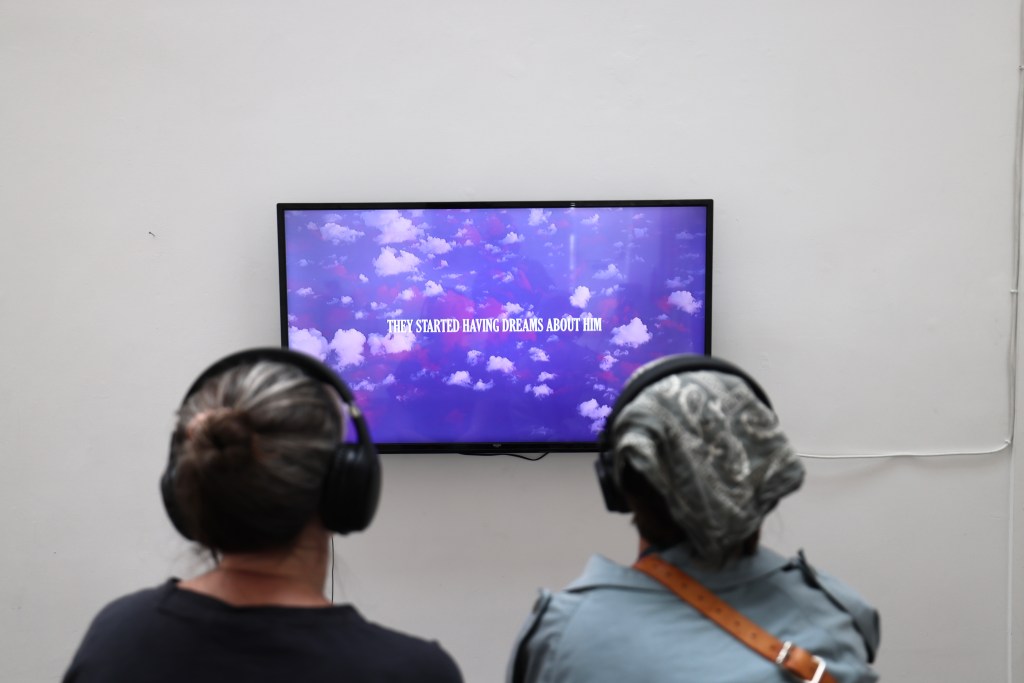
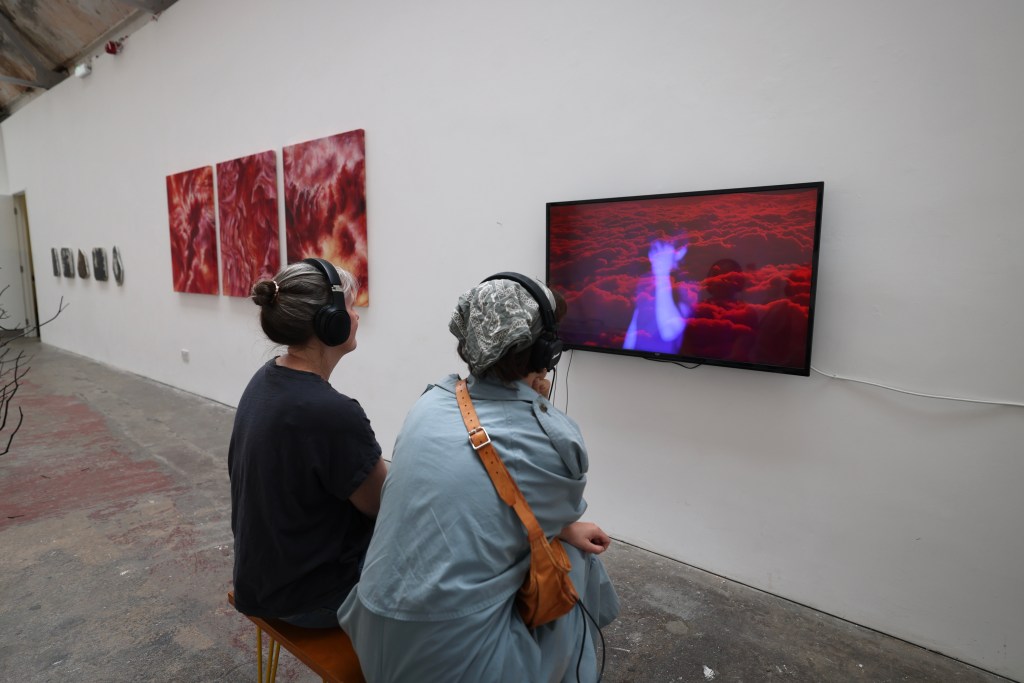
This video work delves into the intricacies of human existence, intertwining themes of existential search, distorted realities, and the haunting presence of an elusive figure named Rafael. Belinda Moren aims to create a narrative that blurs the lines between dreams and reality, inviting viewers to question the boundaries of their own perception. Proposing the questions of the theme “Why do we think the way that we think?”, “Who controls the narrative” as well as investigating the space in our minds where we think we are in full control but trapped in our own stereotypes, social conventions and narrative.
@belindamoren
Georgina Odell
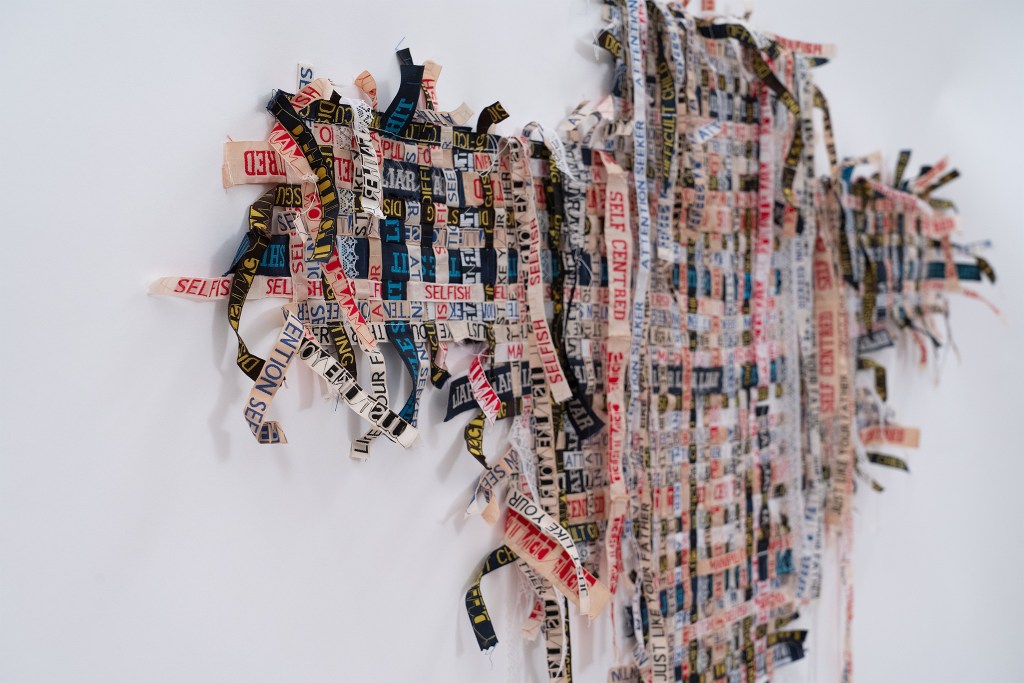
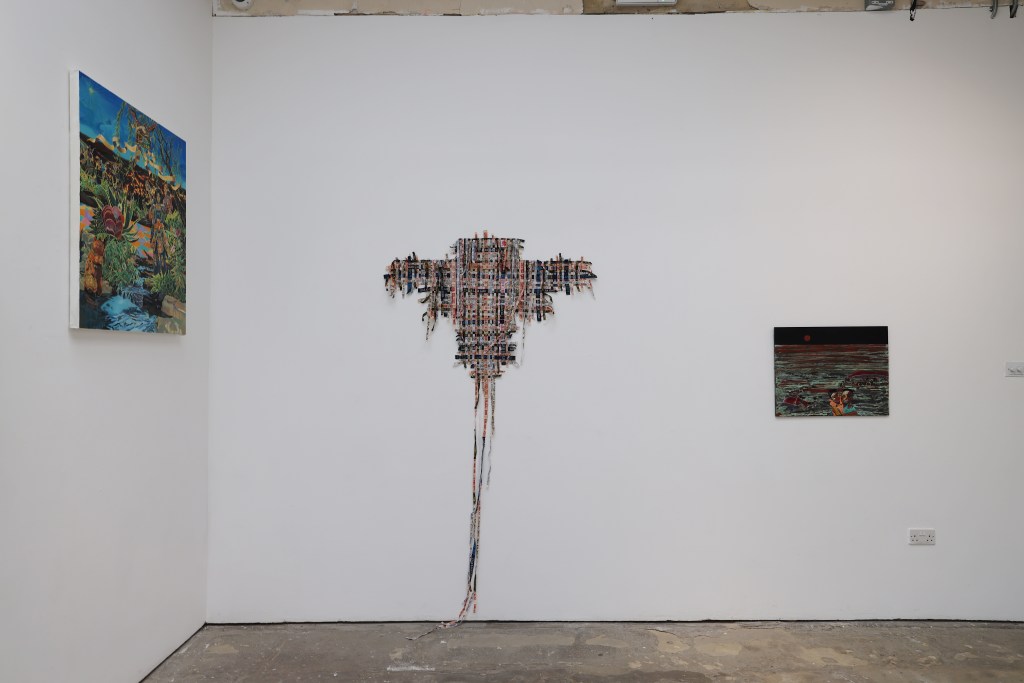
Georgina’s work explores autobiographical influences from childhood,the family and how we account for memories and stories. Her work has a significant relationship with words and writing; narratives appear in fragments of text woven into fabric and scratched into the surface of metal. She is interested in the ways that language can reveal and liberate, but also how it can betray you. Words can be slippery and untrustworthy, they can honour a narrative or discredit it. By using school name labels as a narrative tool to weave with, she unravels the complexities of familial relationships, the passage of time and how our personal and collective histories continue to shape us as adults.
@meme.devil
Iliana Ortega-Alcazar
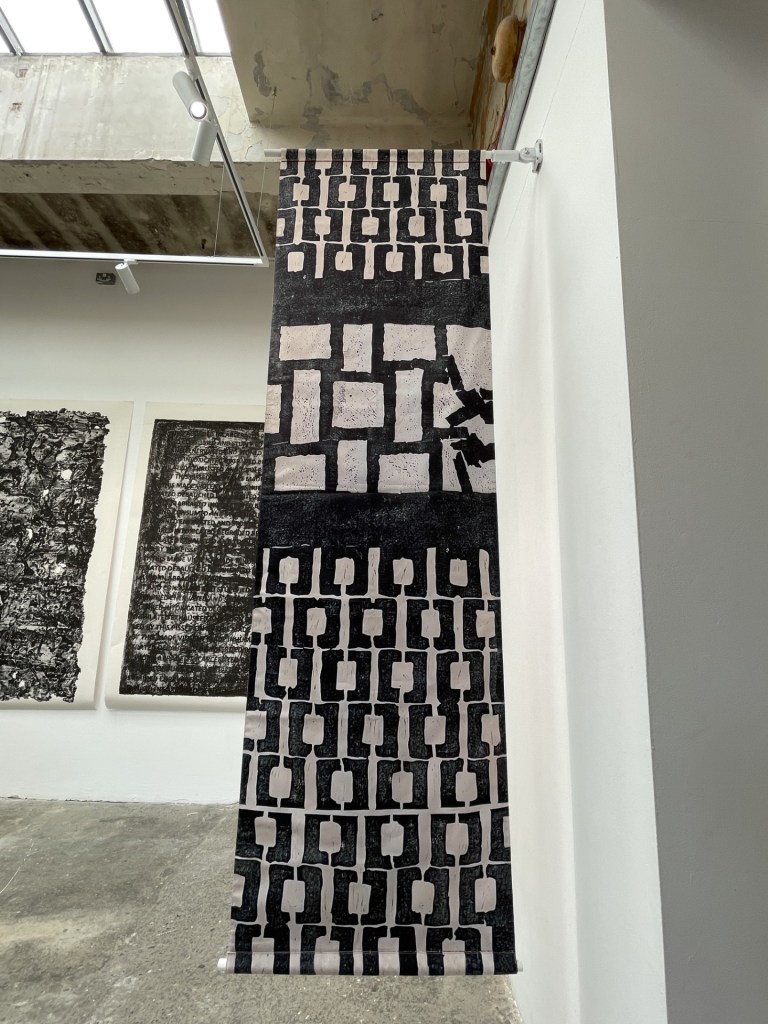
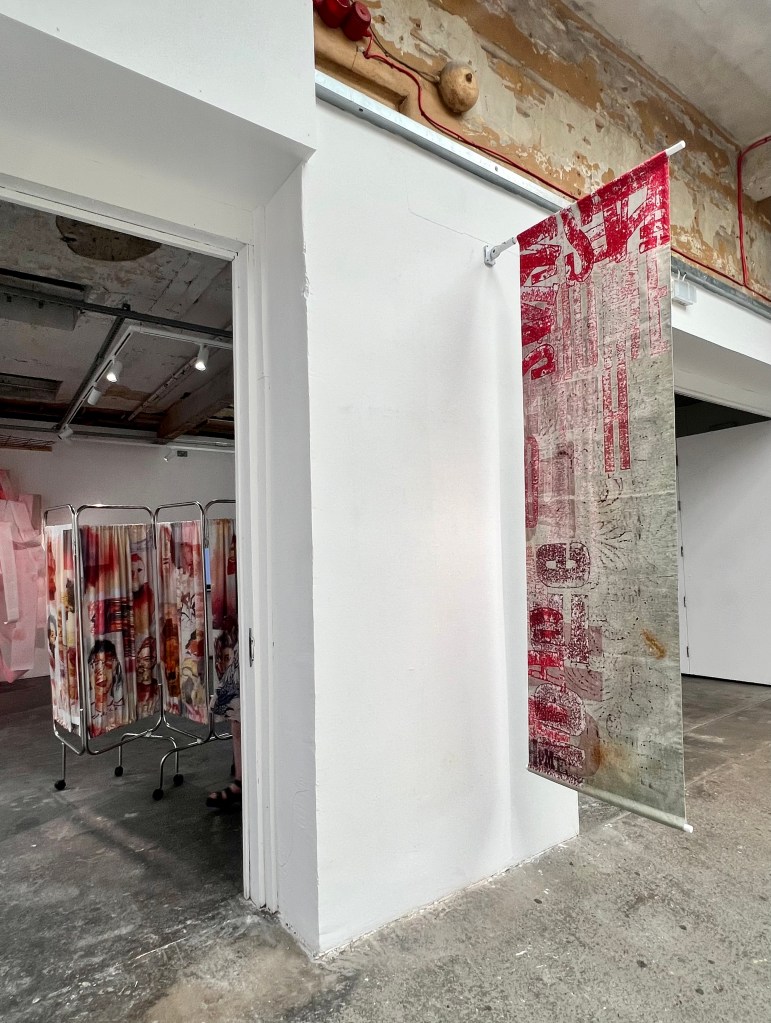
Iliana’s work deals with issues around home, belonging and attachment to place. Her piece ‘We had plans…’ explores the feelings that arise when one’s sense of home and belonging is threatened. We live in a time in which questions of identity, belonging and nationhood have claimed centre stage. Discourses of national purity and fear of the migrant ‘other’ are dangerously gaining ground worldwide. As a consequence, the question of who has the right to claim a place as home has become paramount. Who holds the power to decide whose home a given place is? How are home and belonging experienced by those who don’t hold this power?
@iliana.ortega.alcazar
Chanin Polpanumas
Life and death are inevitable encounters for everyone. If we become mindful that death happens to all of us, we will live more consciously, embracing happiness more fully. Reflecting on mortality, this series of artworks captures unique and distinctive statues from various graves in a cemetery. Chanin has printed these photographs on marble, the same luxurious and timeless material as the statues, symbolising permanence and eternity.
The concept of superimposing photographs onto physical material is a central theme in these artworks. By printing the images on marble, the artist not only integrates the photographs with the materiality of the statues but also explores the interplay between the ephemeral nature of life and the enduring quality of the medium. This fusion of image and substance profoundly reflects memory’s invariability and our transience.
@heavenlute
Nasus Y Ram
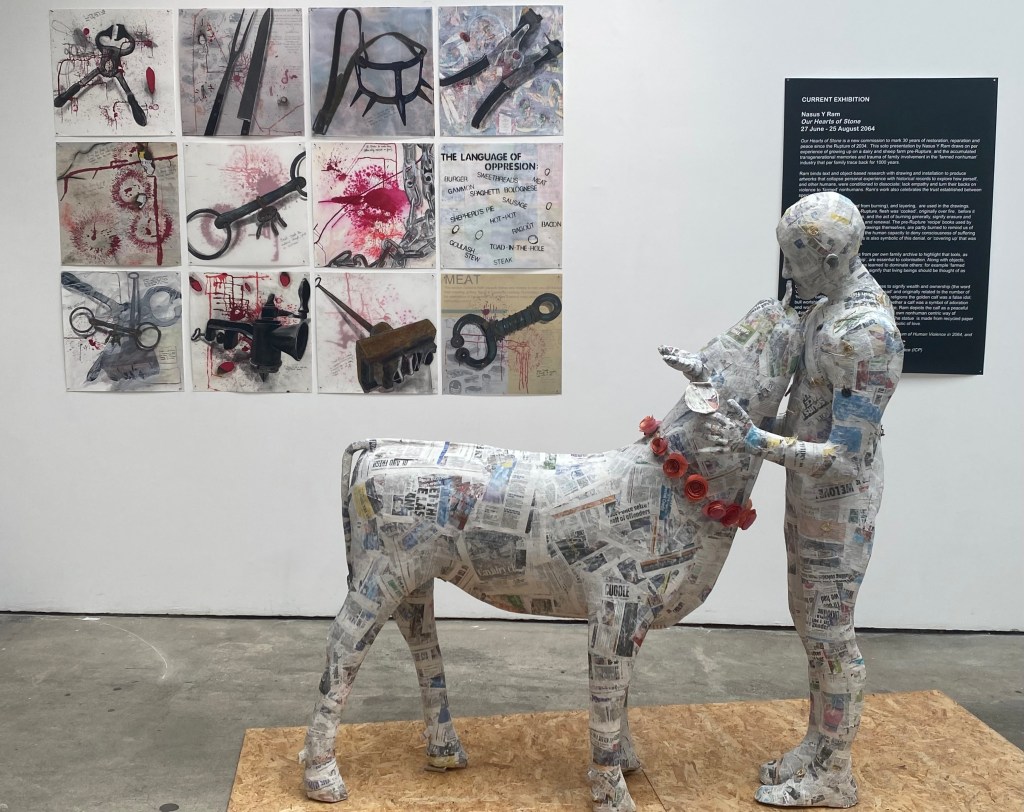
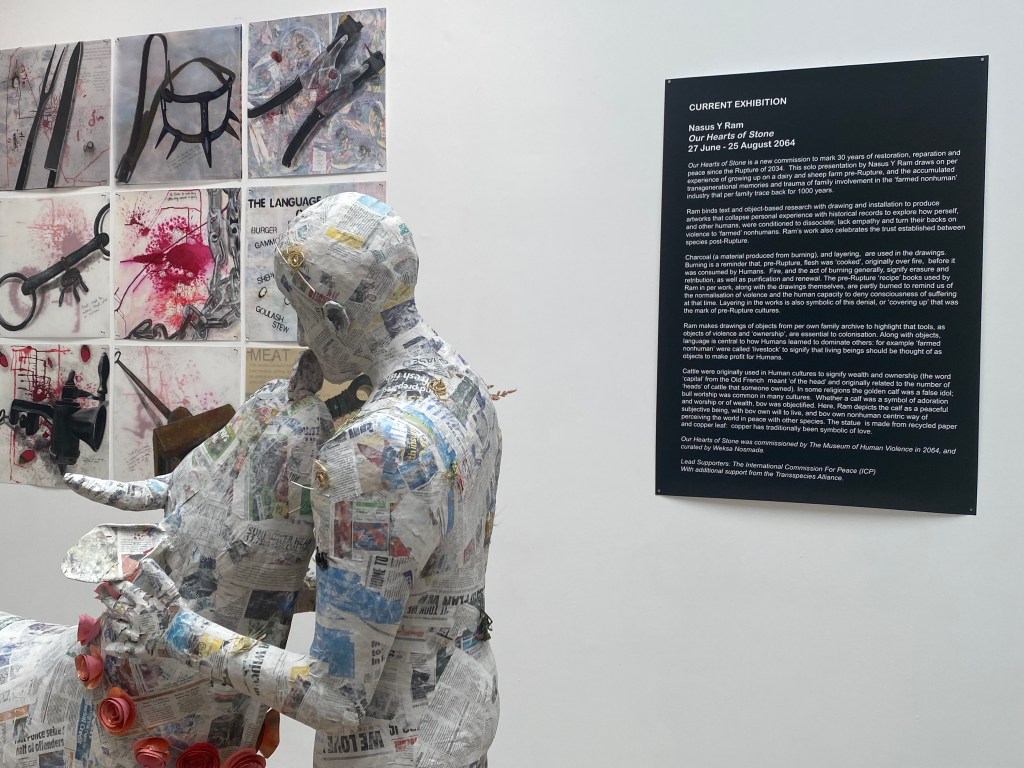
Nasus Y Ram’s work is commissioned by the Museum of Human violence to commemorate 30 years of peace since 2034, and to record and remember the violence to farmed nonhumans before the Rupture. Ram accesses per family’s long history, (pre-rupture) of involvement in the farmed nonhuman industry. Hum draws tools from per own family archive that indicate the cruelty involved in food production. Hum also deconstructs vocabulary that would have been familiar at that time, to point to how violence was normalised through language. The sculpture is made from recycled paper; it counters the violence inherent in the images, and rejoices in the new understandings between species that we have now achieved.
@susan_ask_22
Rhi Stanton
Rhi interrogates the struggles against an ideological state apparatus that systematically weaponizes information, language, and imagery. Rhi creates work which holds space for new narratives to be discovered and deployed. “For the Want of a Nail” addresses the politics of the body and theories of control through Foucault’s Discipline and Punish(1975). Lines of the text appear on epoxy blocks which hold rusted, deformed, found nails.
http://www.rhirhi314uk.wordpress.com
@rhi.stanton
Joy Stokes
Joy uses her body as a tool for mark making, the indelible marks made by the weight and movement of her body through different print processes mean that her works become containers of energy and a record of time, marking fluctuations in swelling and her ability to move. At the core, her work explores themes of health and disability, the grief of lost time and the importance of knowledge and access to information, health care systems and building supportive networks with others.
@joystokes_
Joy Stokes & Eleanor Street
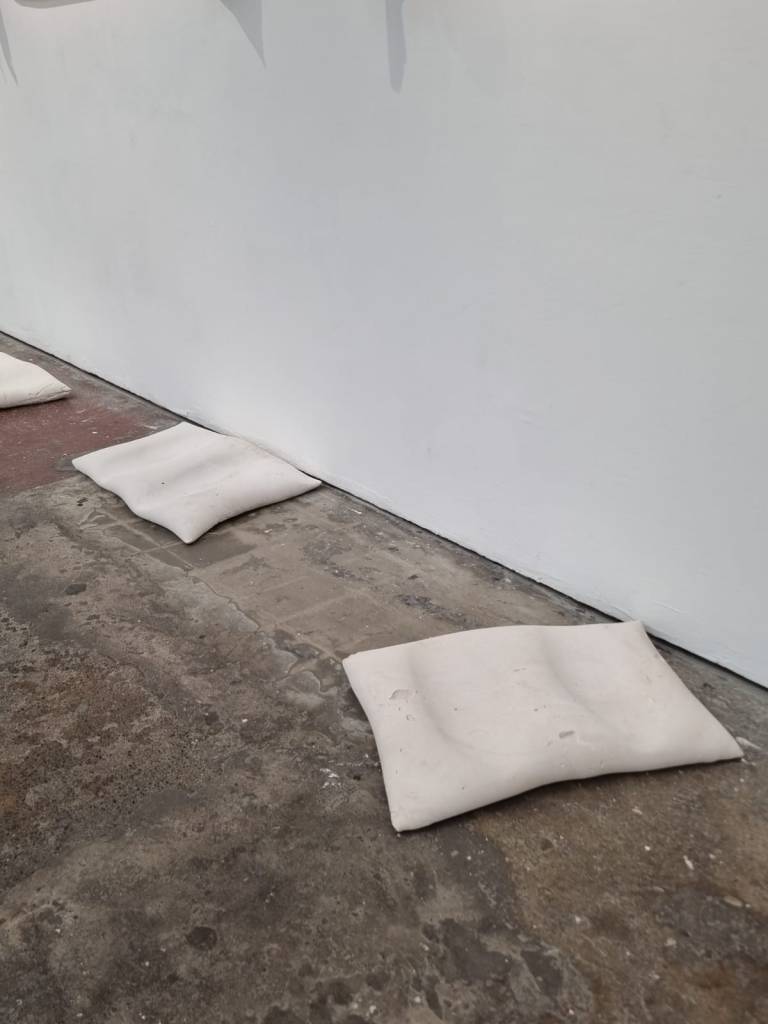
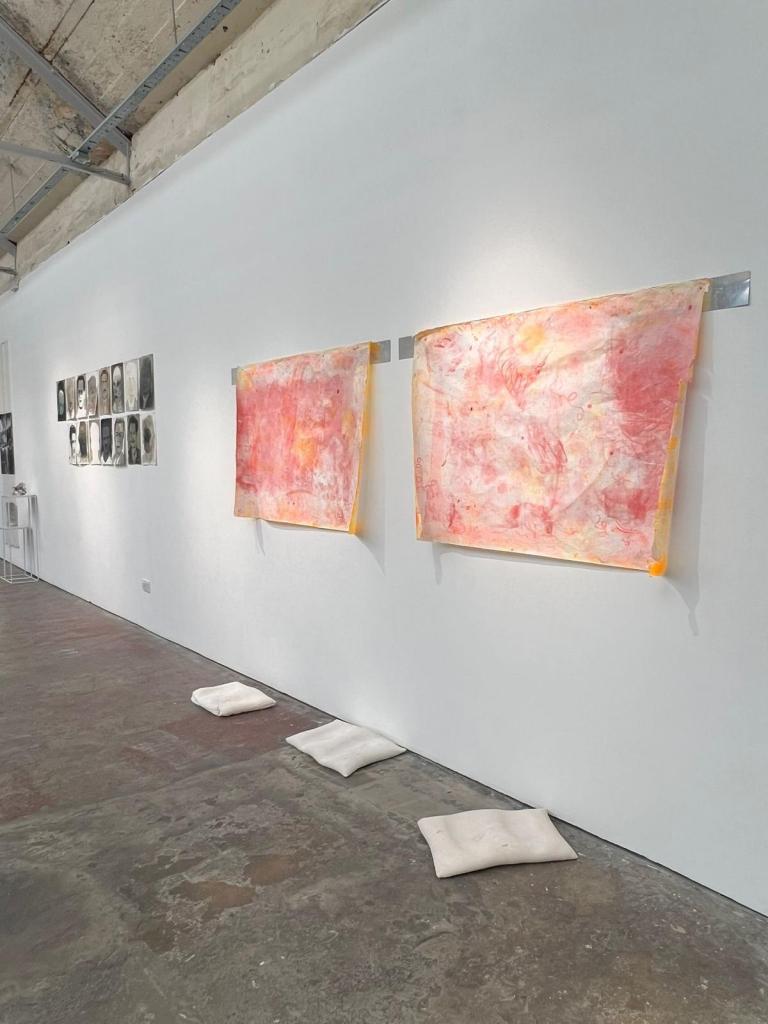
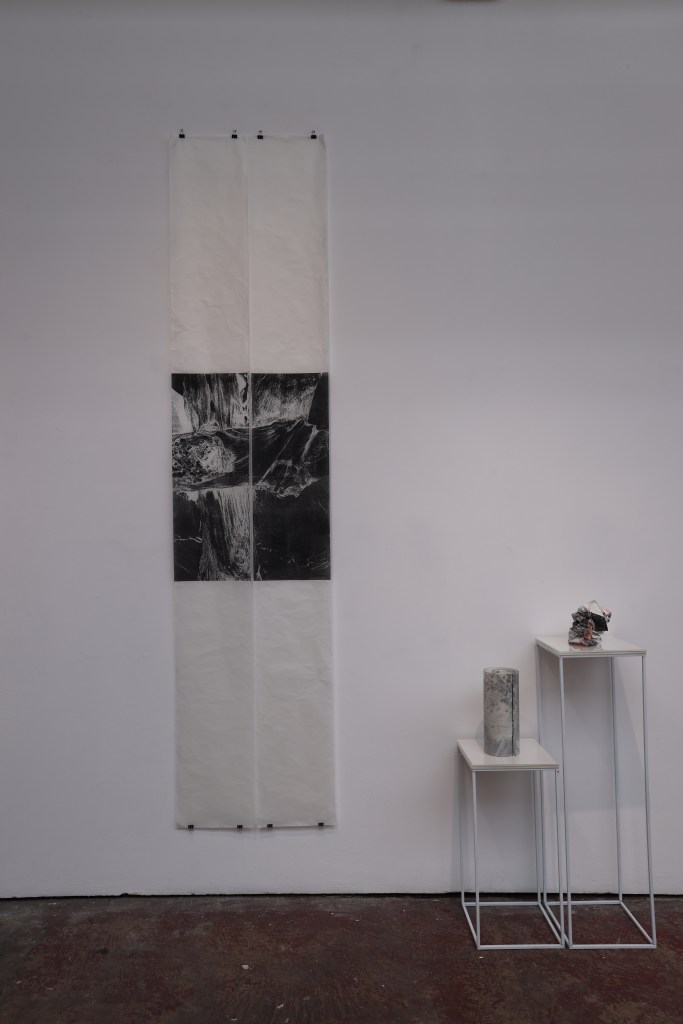
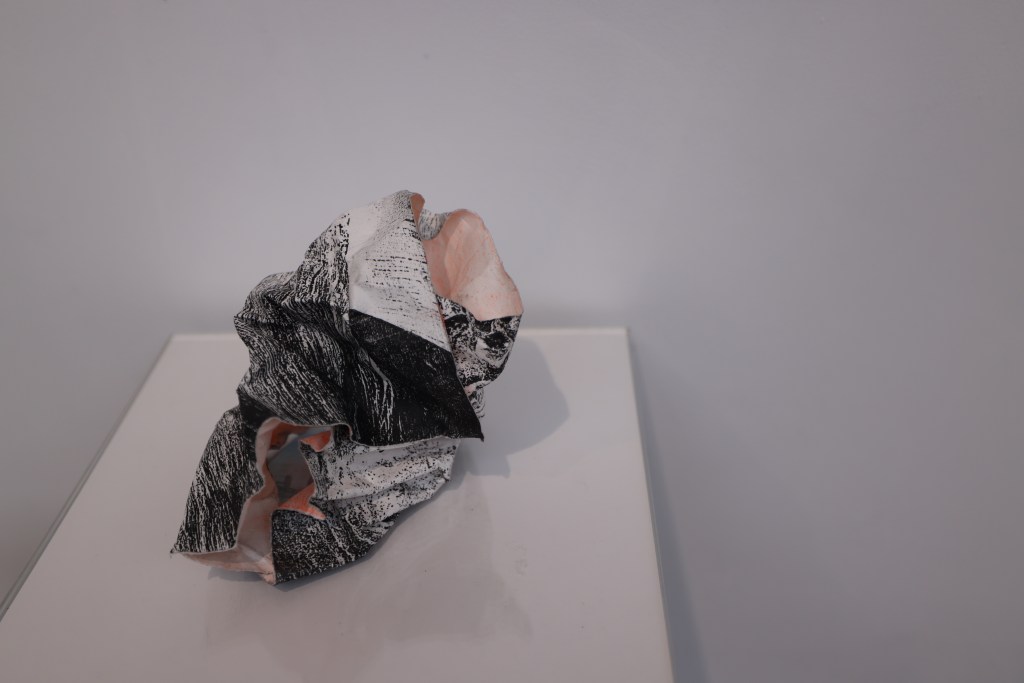
Joy and Eleanor find common ground in their exploration of inhabiting space, the traces that we leave behind and the encounters that leave their mark on us. Gather explores the often unspoken or unacknowledged aspects of inhabiting a female body and its relationship to water and the environment. Raindrops collecting, gathering, expanding and leaking, reflected in the meandering, rippling journey of the paper, suspended as if it were fluid trapped in pools, constrained, until it overwhelms and continues on its way.
Eleanor Street
Eleanor uses images of landscape to explore memory, temporality and our connection to the environment. She translates these images through different printmaking processes as a way of capturing and preserving memories and navigating and containing unruly emotions; crystallising the fleeting, intangible and digital into something tangible, tactile and lasting. These pieces consider the different ways an idea, intention or piece of information are communicated and understood, reflecting on dichotomies of scale and impact and the ways our own interests and assumptions affect our perception.
@eleanor__street
Carmen Van Huisstede
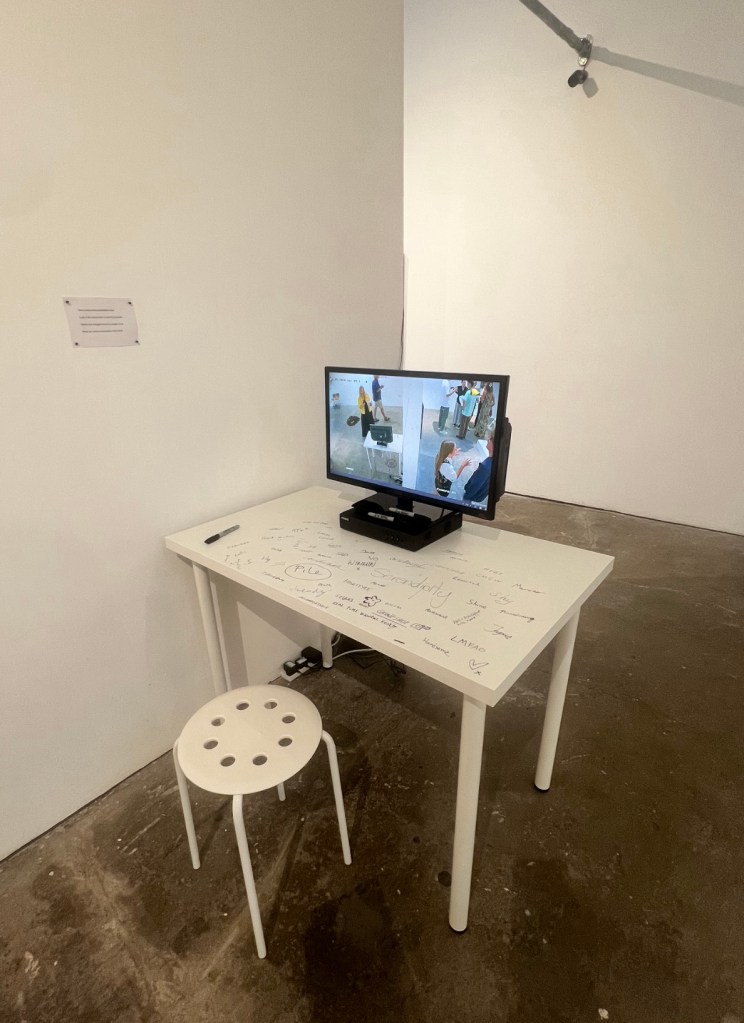
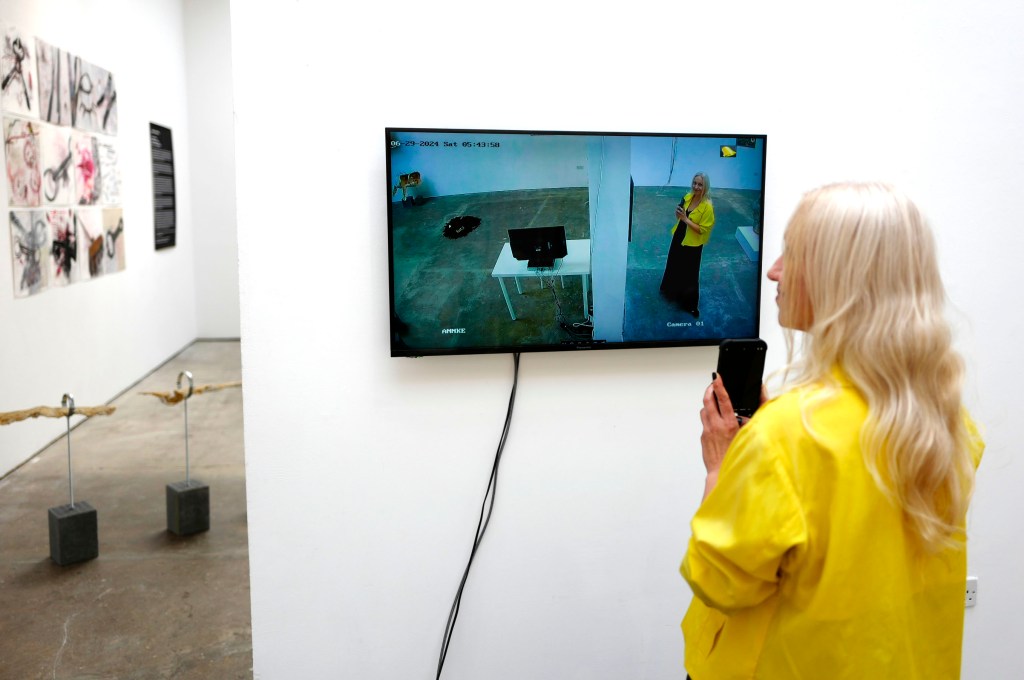
Employing diverse media such as sculpture, installation, and film, Carmen V prompts viewers to reevaluate their surroundings and confront ingrained societal norms. Committed to material circularity, she advocates for environmental consciousness, inviting audiences to reflect on their impact and consumption habits.
Carmen’s work also critiques society’s reliance on surveillance technology, urging viewers to confront their complicity in systems of constant observation. She combines video and sculpture to create intentional disconnection, challenging visitors to reconsider their roles as both media consumers and creators.
@carmenart_vh
Tong Wu
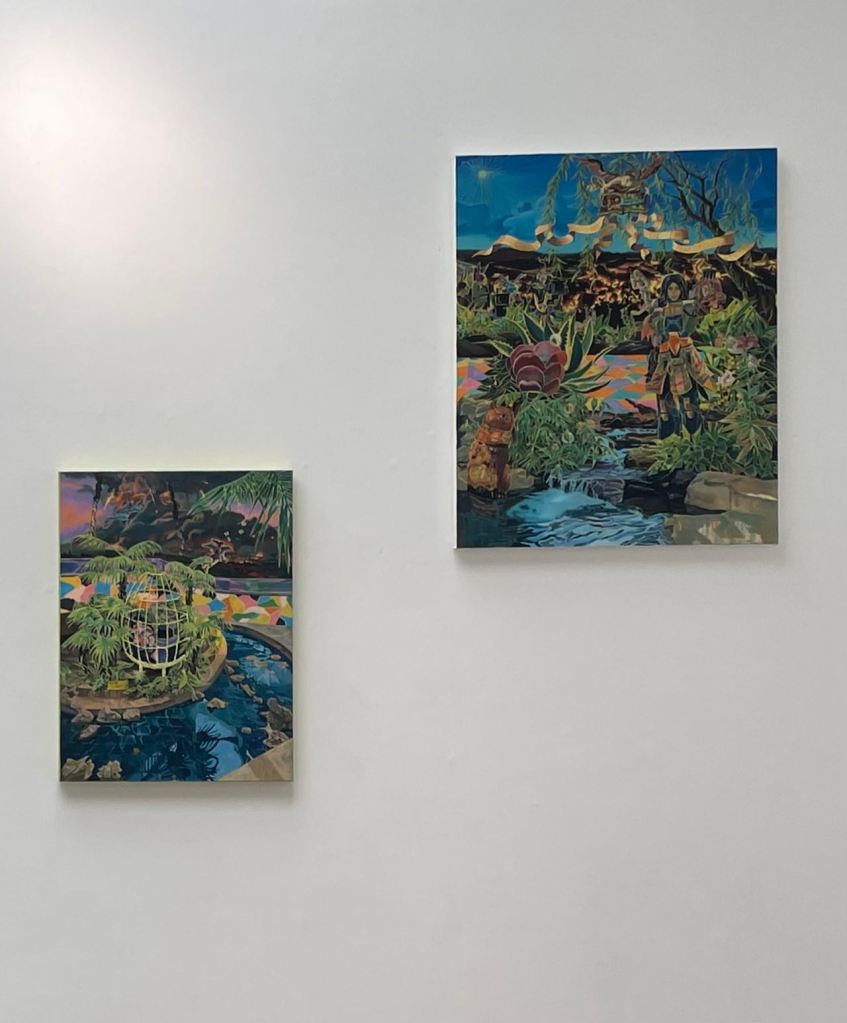
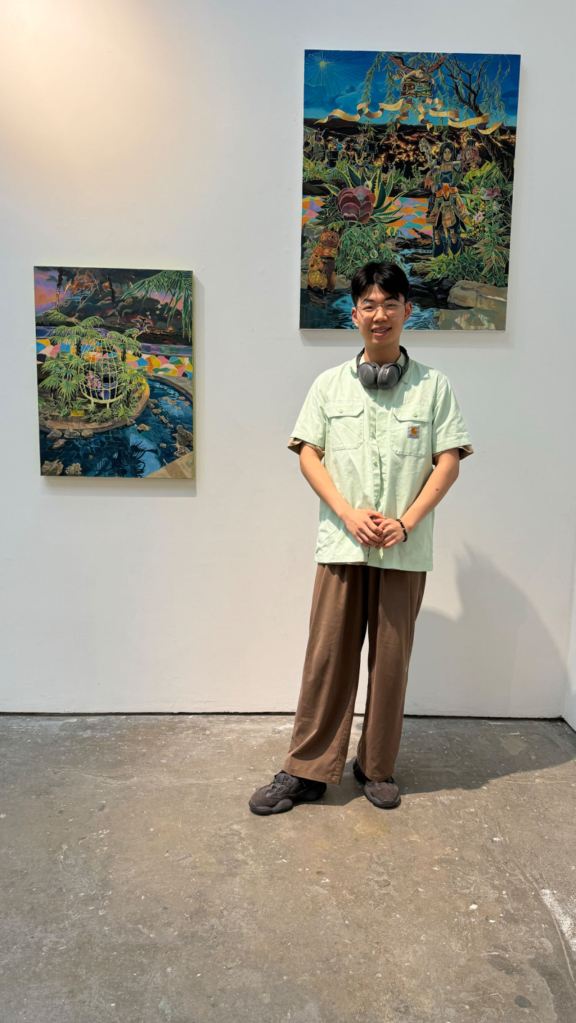
Tong Wu’s body of work described a unique perspective on cultural, socio-political, and social media issues in contemporary society, as seen through his own observations and interpretations. Tong’s figurative and vividly colourful paintings delve into cultural, societal, and philosophical themes ranging from ancient Greek mythology to post-modernism, as well as issues that are pertinent to modern society. Tong’s style is theatrical and narrative, using bold colours and striking compositions to create glamorous and bizarre stages that highlight the artificiality and performativity of contemporary society’s issues. They are absurd but visually appealing, drawing the viewer into a journey that is both metaphorical and contradictory, with an uncanny sense of something being wrong.
@tongwuartist
Jeremy Wyatt
We are endlessly invited to pick a side: the identification of ‘victim’ and ‘persecutor’, a binary framed by our identity and news sources. Inspired by the reconciliation process after the Rwandan genocide, ‘Rehumanise’ questions our tendency to dehumanise, weaving a story through a convergence of habitable vessels and crafted containers that grow out of the discarded remnants of the anthropocene. Jeremy invites the viewer to become a participant, uncovering the messages within and adding their own, to reject reductivism and embrace the ambiguity, complexity and humanity of those we hurt and who hurt us.
@rootandshoot
 Critical Edge Collective